Our Community · HistoryThe Iron Century

The furnace empire that first put these highlands on the map.

Named for a queen

The first chapter of this corner of Kinnelon was written in iron. In 1765–66 the German ironmaster Peter Hasenclever — newly arrived as agent for the London-based American Iron Company — built furnaces and forges in these hills and named the tract for Queen Charlotte, wife of King George III. Charlotteburg gave the highlands their first place on the colonial map.

A furnace empire

Hasenclever's was no small venture. Across the Ramapo highlands he assembled, at its peak, four blast furnaces — at Ringwood, Charlotteburg, Long Pond, and Cortlandt in New York — along with seven forges and two stamping mills, employing some five hundred workmen. The investment was enormous (on the order of £55,000) and the output modest (about 300 tons of bar iron a year), and the alarmed company eventually recalled him. By local accounts the region's furnaces would later be said to supply as much as a seventh of the world's iron and to consume an acre of trees a day for charcoal — figures that belong to local history more than to the ledgers.

Faesch and Erskine

Operation of the Charlotteburg furnace and its forges passed in time to two of the great ironmasters of the colonial highlands: John Jacob Faesch and Robert Erskine. Under them the works ran on through the most consequential years the region would know.

Iron for the Revolution

When war came, the ironlands took the American side. Robert Erskine supplied iron to the Continental Army and became George Washington's Surveyor-General — the army's chief mapmaker — until his death in 1780. Local history holds that Erskine raised and trained the first organized militia in New Jersey here at the works to guard the furnaces from British raids, and that England's demand that colonial iron be shipped home, manufactured, and sold back helped turn local ironworkers toward the cause.

Under the reservoir

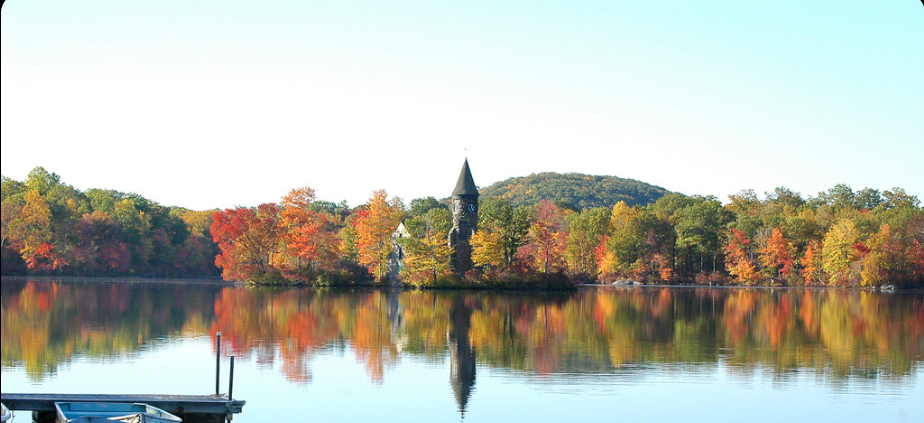
Demand for iron fell after the Revolution, and the Charlotteburg furnaces faded; by the 1800s the ironlands gave way to farms. The furnace ruins themselves now lie beneath the waters of the Charlotteburg (Pequannock) Reservoir, just south of the Smoke Rise North Gate — the iron century quite literally submerged beneath the water that followed it.

The ironmaster

Robert Erskine

Ironmaster of the Charlotteburg and Ringwood works, Robert Erskine took up the American cause — supplying iron to the Continental Army and serving as George Washington's Surveyor-General, mapping the country for the army until his death in 1780.

Frequently asked

What was Charlotteburg?

An 18th-century iron-furnace settlement on the Pequannock River, built in 1765 by the ironmaster Peter Hasenclever and named for Queen Charlotte, wife of King George III. The furnace ruins now lie beneath the Pequannock reservoir.

Source: Wikipedia — Kinnelon; local history

Before the lakes and the gates, these hills made iron.

From the community

This history grows with you

Knowledge of this place lives in its families. If you can add a story, correct a detail, or bring forward a name still waiting to be told, we'd be honored to include it. Every submission is read before it's published.

Your turn

Be the first to add to this history

A story, a correction, or a name we've missed — every piece helps. It takes a minute.

Visit this place

Charlotteburg (Pequannock) Reservoir

Verified location41.02474, -74.43113 · USGS GNIS 883562

The 18th-century Charlotteburg furnace ruins lie beneath the Charlotteburg (Pequannock) Reservoir; the surrounding watershed is preserved public open space.

Sources

Compiled from publicly available sources; where accounts differ, the most widely documented version is used. Community corrections welcome.

Explore more of the Highlands