The doctor who brought medicine to a town that had none.
1896–1990 · Physician · Kinnelon's first doctor
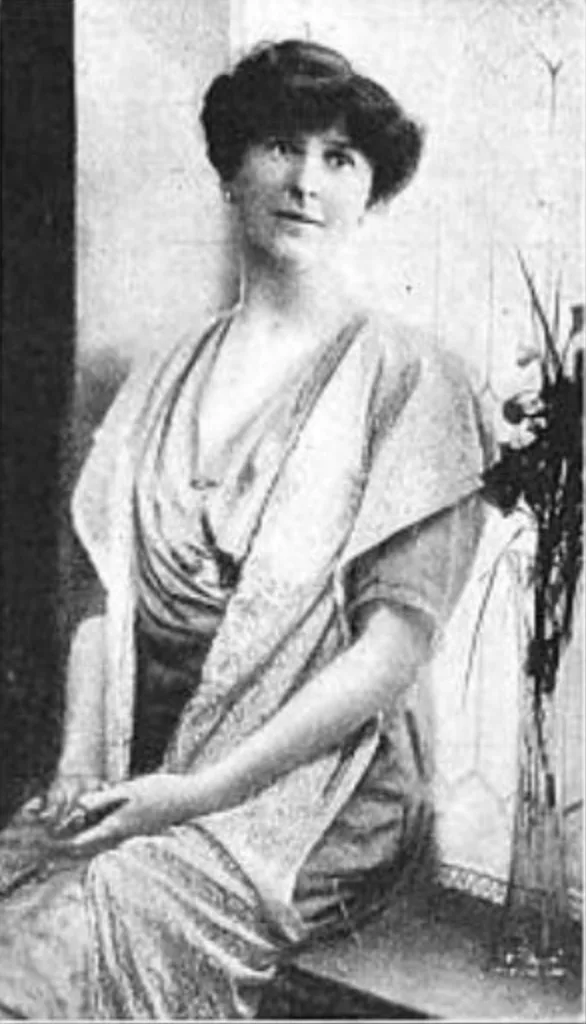
When Kinnelon was a few hundred people scattered across the highlands, it had no doctor of its own — so its neighbors knocked on the door of the woman who lived in the old schoolhouse. Helen L. Miller had crossed the country to get there: an Oregon farmer's daughter who decided at eleven that she would be a physician, trained in an era when the door to medicine was closing on women, and then spent nearly sixty years holding it open for one small New Jersey borough. She gave Kinnelon its first medical center and one of the country's earliest cancer-detection clinics for women — and when she died, she left the town the very house she had practiced in.
Two Millers, one Kinnelon
A quick word on the name, because Kinnelon has two famous Millers and they are easily confused. This is Dr. Helen L. Miller, the physician. She is not to be confused with Alice Duer Miller, the suffrage poet honored by the chapel on Miller Road, nor with Alice's husband, Henry Wise Miller — no relation between the two families. Dr. Miller belongs in this history as a notable resident of Kinnelon, not as one of its founding families.
Oregon beginnings
She was born Helen Louena Miller on June 27, 1896, in Corvallis, Oregon, one of twelve children. Her father, a farmer, died when she was five, and the family kept itself going by running a bookstore for the students of Oregon State. By the age of eleven Helen had already decided she would become a doctor — and she held to it despite a family that hoped she would choose something they thought more suitable for a girl. She earned a B.S. in home economics from Oregon State in 1917, then worked for years, teaching among other jobs, to save the money medical school would cost.
A woman in medicine, when the door was closing
In 1922 she entered the University of Oregon Medical School in Portland — today Oregon Health & Science University — and graduated in 1926 as one of only two women in a class of forty-seven. The timing cut against her: the share of women in American medicine was falling in those years, not rising. She won a coveted internship at the New York Infirmary for Women and Children — the first hospital run by women, opened in 1857 by the sisters Elizabeth and Emily Blackwell with Dr. Marie Zakrzewska — and she never left New York.
Licensed in New York in 1927 and in New Jersey in 1928, she was chosen by the city's health commissioner to set up the first prenatal clinics in three New York settlement houses, and she ran a private obstetrics-and-gynecology practice of her own.
Coming to Kinnelon
Her tie to Kinnelon came through L'Ecole. She joined the L'Ecole Corporation, which in 1927 had bought the old Meadtown schoolhouse — the 1873 building that had replaced the borough's first 1839 schoolhouse — and given it the French name, “the school.” In 1943 Helen bought L'Ecole herself, keeping an apartment on Park Avenue in the city and using the Kinnelon house as a country retreat.
One date is worth getting right: many accounts say she bought L'Ecole in 1931, but the deed is dated 1943, and we follow the deed. The 1931 figure is a common — but unverified — error.
A town with no doctor
Kinnelon, in those years, simply had no physician — the 1930 and 1940 federal censuses record none in the borough at all. So people did the obvious thing: when someone was sick or hurt, they came and knocked on Dr. Miller's door. What began as neighbors turning up became a practice; she opened it out of L'Ecole and, in 1954, expanded the house to make room for the work.
The Medical Center
Then she built the town a real one. She broke ground in 1963 on the Kinnelon Medical Center — occupied in 1964 and formally dedicated in 1966 — a roughly $175,000 building with eight medical suites. It stands today as the Kinnelon Professional Center.
The Cancer Detection Center
In April 1964 she opened something rarer still: the Kinnelon Cancer Detection and Research Center, built around the early screening of women for cancer. To run it she recruited Frances Bogatko, the former director of New York's Strang Cancer Prevention Clinic — the Kate Depew Strang Tumor Clinic, founded in 1933 as the first clinic in the country for the early detection of cancer, and housed at the very Infirmary where Helen herself had trained.
She pushed pap tests and mammograms early, when neither was routine, and she paid $20,000 of her own money so that women who could not otherwise afford the screenings could have them for free.
Period sources put her achievement in superlatives: a 1969 Trends profile called Dr. Miller the first woman in the country to build a medical center with a cancer-detection center inside it, and described her center as one of perhaps two dozen in the nation. Those are the period press's framings, attributed here to them — not claims this page can independently settle.
Honors, and what she left behind
The profession noticed. The Women's Medical Society of New York State named her its “Woman of the Year” in 1965, and she served as the society's president from 1962 to 1964; in 1962 she was a delegate to the International Women's Medical Association meeting in Manila. She funded a medical-school scholarship for women.
She kept working into 1987 and, at ninety-three, was still planning a second medical building. She died on June 18, 1990, days short of her ninety-fourth birthday, after nearly sixty years of caring for Kinnelon. She willed L'Ecole to the borough to become a museum: the L'Ecole Kinnelon Museum opened in August 1991, run by the Kinnelon Historical Commission, at 25 Kiel Avenue — the old schoolhouse turned doctor's house turned keeper of the town's memory.
The timeline
1896
Born Helen Louena Miller, June 27, in Corvallis, Oregon — one of twelve children.
1917
Earns a B.S. in home economics from Oregon State, then works for years to fund medical school.
1926
Graduates the University of Oregon Medical School (today OHSU), one of two women in a class of 47.
1927–1928
Interns at the New York Infirmary for Women and Children; licensed in New York (1927) and New Jersey (1928).
1943
Buys L'Ecole — the 1873 Meadtown schoolhouse — in Kinnelon (deed date; not 1931).
1964
Opens the Kinnelon Cancer Detection and Research Center for the early screening of women.
1966
The Kinnelon Medical Center, begun in 1963, is dedicated — eight suites, about $175,000.
1990
Dies June 18, days before her 94th birthday, after nearly 60 years serving Kinnelon.
1991
The L'Ecole Kinnelon Museum opens in August, run by the Kinnelon Historical Commission.
“A town with no doctor knocked on her door — and she answered for sixty years.”