
The Chapel
Our Lady of the Magnificat
A widower's grief became a stone chapel lifted from the English countryside — and grew into a parish, a school, and a cemetery.
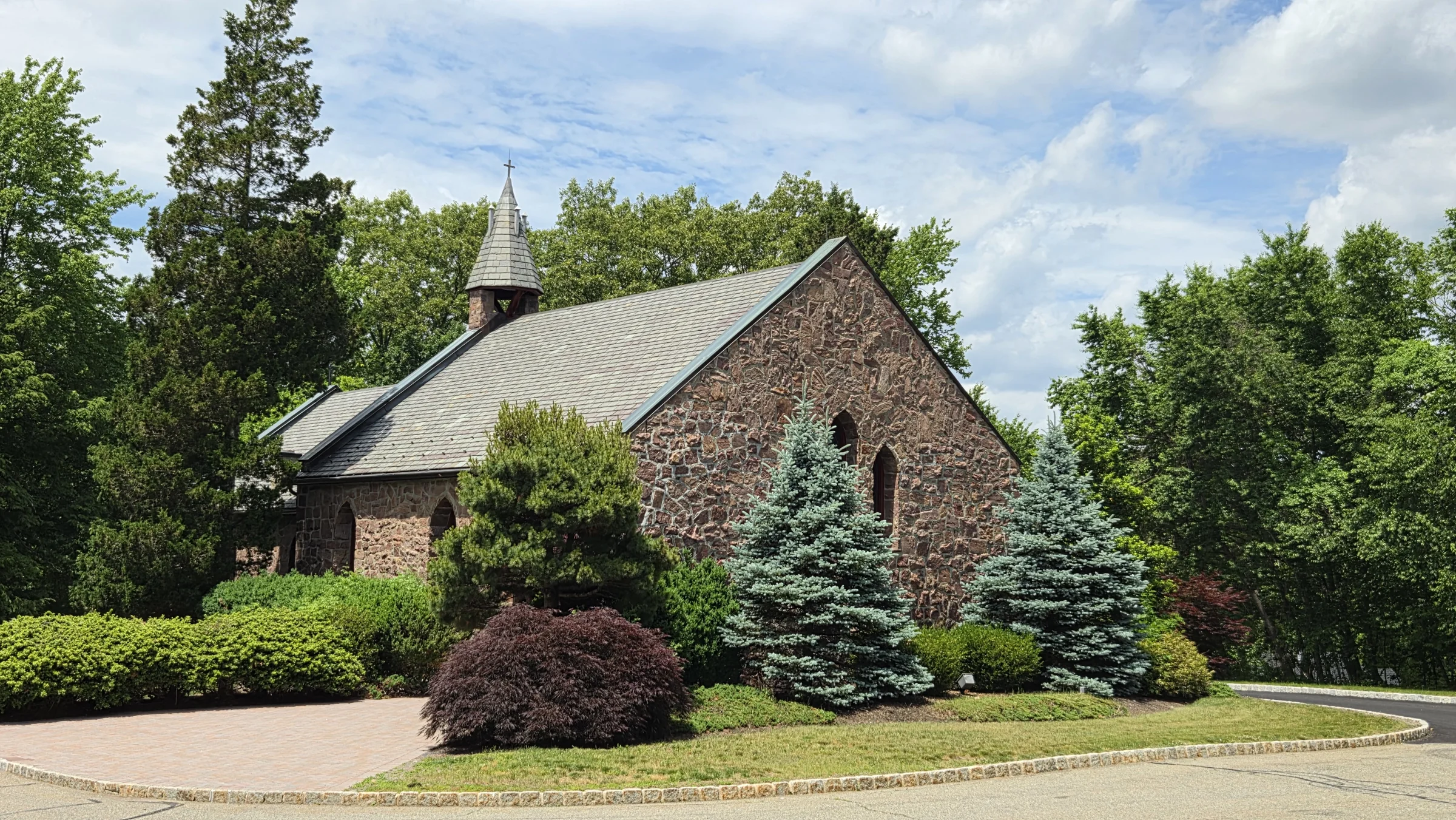
A chapel, a New Deal reservoir, a suffrage poet's memory, and the longest dead-end in town.
Most of Kinnelon's roads are just roads. Miller Road is a small anthology of the town's history laid end to end: a stone chapel that looks airlifted from the English countryside, a Depression-era reservoir that still pours out of Butler's taps, a scatter of big wooded houses on a dead-end so long the neighborhood tells stories about it — and, behind one quiet name, one of the most quietly remarkable American women of the twentieth century. Here is the road, layer by layer.
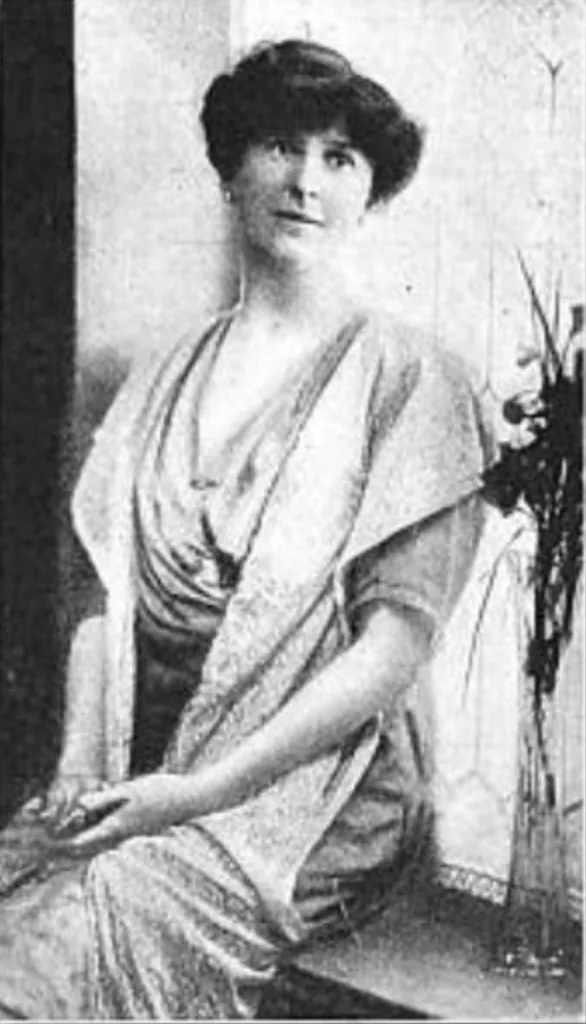
WOMEN WHO SHAPED KINNELON
She loved mathematics when girls were told it wasn't for them, and paid her own way through college by selling poems. Then she turned those poems into a weapon — rhyming, line after line, until America gave women the vote. The chapel on Miller Road was built in her memory. Hers is the story to hand any girl who's ever been told there's something she can't do.
Alice Duer Miller, from The Woman Citizen, 1917 (public domain, Wikimedia Commons).
Explore Miller Road
The Chapel
A widower's grief became a stone chapel lifted from the English countryside — and grew into a parish, a school, and a cemetery.

The Reservoir
A lake the federal government built during the Depression, down a dirt road off Miller Road — and still Butler's drinking water today.
The Homes
Fifty-plus wooded properties on a dead-end backing onto preserved state land.
The Folklore
A claim neighbors love to make — wonderful, and so far unproven.
Start with the honest part: we do not actually know who Miller Road is named for. It is tempting to tie it to Alice Duer Miller and her husband Henry, whose chapel stands on it — and we may yet be able to. But the records cut both ways. Miller was already an established Kinnelon name long before Henry Wise Miller arrived: a borough history notes that by 1887, the area's well-known families included the Smiths, Millers, Rickers, Deckers, and Meads — the same founding-era families that gave Kinnelon names like Meadtown. So the road may trace to that earlier local family, the way Meadtown traces to the Meads — which would make the Duer-Miller connection partly a coincidence of surname. Or it may go back to Henry, who lived on the road by the 1950s.
What would settle it: whether “Miller Road” appears on maps before 1925, when Henry bought his land (the 1868 Beers atlas or early USGS maps would show it), and the records held by the Kinnelon Borough Historian, Thomas Kline, and the Historical Commission at the L'Ecole museum. Until one of those confirms it, this page states the documented facts — the chapel, the family, the road's name — without claiming a namesake.
Know who Miller Road is named for?Help us confirmMiller Road runs through the wooded western edge of Kinnelon, in the Highlands near Fayson Lakes, climbing toward Kakeout Mountain with much of its far end backing directly onto state land. It dead-ends — and that dead end is half the road's local fame (more on that below). It is a quiet, tucked-away place, which is exactly why the two things that made it locally important — a reservoir and a chapel — both chose it for its seclusion.
Turn off Miller Road onto a small dirt road and it leads you down to the bank of the Kakeout Reservoir — also called the Butler Reservoir, after the borough whose drinking water it still holds. Most people driving Miller Road never realize a body of water this size is tucked just off it. It is a genuine piece of New Deal history sitting in plain sight.
In the depths of the Depression, the federal Works Progress Administration built it by damming Stone House Brook, a tributary of the Pequannock, and flooding an old roadway that had connected Butler and Kinnelon. Engineering was directed by Cornelius C. Vermeule of the Butler Borough Water Works; period newspaper accounts describe a workforce of around 350 men and a total cost in the neighborhood of a quarter-million dollars. The borough's own history dates the WPA's completion of the reservoir to 1937, on Kinnelon land east of Kakeout Mountain. Nearly ninety years later it is still working: it remains the source of Butler's drinking water, holding roughly 950 million gallons and serving Butler, the High Crest Lake section of West Milford, and parts of Kinnelon. (During the Second World War, guards were even posted to defend the town's water supply.) For a small road, that is a remarkable neighbor — a working monument to the 1930s.
At 2 Miller Road stands a small stone chapel that looks centuries older than it is. It was built by Henry Wise Miller — a retired New York stockbroker, author, and lecturer — in memory of his late wife, the writer Alice Duer Miller, who had died in 1942. A devout Anglican, Henry had been moved by a medieval English country chapel in the parish of Harescombe, Gloucestershire, and built a stone replica of it on his Kinnelon land. (Sources differ on the original's age — the parish history calls it 13th-century; Henry's 1954 obituary said 14th — but they agree on the place and the act.) When he described his devotion to Our Lady's canticle, the Magnificat, Bishop James A. McNulty suggested the chapel's name. Henry gave the chapel and about eighty acres to the Diocese of Paterson; Bishop McNulty dedicated it on July 2, 1954. Henry died that September — and the first funeral Mass held inside the chapel he built was his own. The parish, Our Lady of the Magnificat, is still active on the road today.
The woman that chapel honors is the road's most luminous thread — and a story worth telling any young person who has been told there are things she shouldn't try.
Alice Duer Miller (1874–1942) studied mathematics at Barnard College in the 1890s — paying her own way by selling stories and poems after her family's fortune collapsed — and graduated Phi Beta Kappa when very few women went to college at all, let alone for math. Then she turned her precision into a weapon. From 1914 to 1917 she wrote a column of short, funny, devastating poems for the New-York Tribune under the title Are Women People?, taking every argument against letting women vote and turning it inside out until it collapsed of its own silliness. The phrase became a rallying cry of the suffrage movement; in 1920 American women won the vote. She went on to a forty-year career as a bestselling novelist and a Hollywood screenwriter, and near the end of her life wrote The White Cliffs (1940), a verse-novel that sold hundreds of thousands of copies and became a 1944 film.
The short version, for a young reader: she loved numbers when she wasn't supposed to, paid her own way, and rhymed until the law changed. Her full story — with her poems and a keepsake you can print — lives on her own page.
Today Miller Road is a residential street of roughly fifty-plus large wooded properties — multi-acre lots, many backing onto preserved state land, the kind of place real-estate listings describe as private and tucked away. It developed, like much of western Kinnelon, from farm-and-forest land into substantial single-family homes over the second half of the twentieth century.
And it is a cul-de-sac — a dead-end — which brings us to the road's favorite piece of folklore.
Locals will tell you Miller Road is the longest cul-de-sac in New Jersey. It's a wonderful claim, and it may even be true — but it is folklore, not fact: no official source, ranking, or record establishes it, and we haven't found one. So we pass it along the way it deserves to be passed along — as the kind of thing neighbors say, with a wink — and we don't dress it up as proven. If anyone ever turns up a real source, we'll happily upgrade it.
Two threads belong on this page but aren't nailed down yet, and we won't invent them. The first is the school: Kinnelon had several one-room district schools by the 1880s, but we have not confirmed a specific school on Miller Road — the Historical Commission or an old district map could settle it. The second is the name itself: whether Miller Road honors the early local Miller family or Henry Wise Miller remains open until the Borough Historian or an early map confirms it.
If you can help with either, the L'Ecole Kinnelon Museum and Borough Historian Thomas Kline are the people who'd know.
Know when the parish school opened — or whether a school ever stood on Miller Road?Tell us“One small road — a chapel, a New Deal lake, and a poet's memory, laid end to end.”
Help us fill this in
A few threads belong on this road but aren't nailed down yet — and we won't invent them. If you can help, here is where the record is still open:
Your turn
A story, a correction, or a name we've missed — every piece helps. It takes a minute.
Sources
Compiled from publicly available sources; where accounts differ, the most widely documented version is used. Community corrections welcome.
Explore more of the Highlands